Formats
Private label shampoo and conditioner: how to build a salon-quality hair care line
Private label shampoo and conditioner explained: what shampoo does, salon vs retail formulas, sulfate-free claims and how to start your own hair product line.

A private label shampoo is a ready-developed shampoo formula that a supplier manufactures, fills and labels under your brand. You choose the formula, the pack and the artwork; the supplier handles production, quality checks and documents. For salons, stylists and start-up founders, it is the fastest route to a professional hair care line without building a lab.
This guide explains what shampoo and conditioner do, what “salon quality” really means, which claims need care, and how to start your own hair product line step by step.
What does shampoo do, and what does conditioner add?
Shampoo cleanses the scalp and hair by lifting oil, sweat and styling residue so they rinse away with water. The work is done by surfactants: molecules that attach to oil on one end and water on the other.
Conditioner does the opposite job. It deposits light, positively charged conditioning agents and oils onto the hair surface, which smooths the cuticle, reduces tangles and static, and helps hair feel softer. Together they form the two products every hair care brand needs first.
- Shampoo: cleanses scalp and lengths, sets the “feel” of the routine (clarifying, volumizing, gentle).
- Rinse-off conditioner: detangles and smooths after every wash.
- Leave-in conditioner: light conditioning that stays on, popular for curly, coily and dry hair.
- Hair treatment products: masks, treatment caps and oils for a weekly deeper step.
What makes professional, salon-quality shampoo different?
Salon-quality shampoo is defined by a gentle, well-balanced surfactant system, good conditioning and a clear purpose for each hair type. It is less about one trendy ingredient and more about how the formula feels on wet and dry hair.
Professional hair products usually share a few traits:
- Mild cleansing: amino acid, betaine or glucoside surfactants, often blended to keep foam rich without stripping.
- Targeted lines: separate formulas for color-treated, damaged, fine, curly or oily hair rather than one “for all” bottle.
- Routine logic: shampoo, conditioner and a treatment that share a story, so a stylist can explain the system at the chair.
- Back-bar and retail sizes: large refill packs for the basin and smaller bottles for clients to take home.
This is why salon shampoo brands sell well through hairdressers: the stylist shows the result, and the client buys the same routine.
Which hair care products belong in a starter line?
A starter hair care line usually needs three to six products that cover cleansing, conditioning and one specialist step. The table shows how the main formats fit together, with examples from the Mars hair and scalp care catalogue.
| Product | Role in the routine | Catalogue example |
|---|---|---|
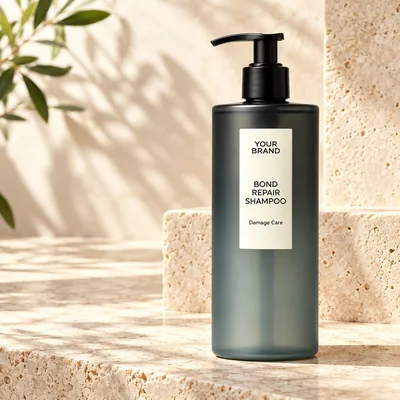
| Repair shampoo | Gentle cleanse for chemically treated or heat-styled hair | Bond Repair Shampoo |
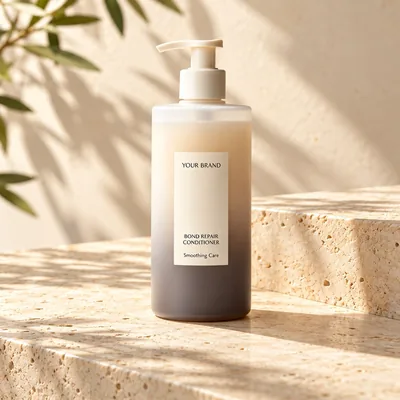
| Smoothing conditioner | Detangles and smooths after washing | Bond Repair Smoothing Conditioner |
| Volumizing shampoo and conditioner | Light cleanse and conditioning for fine or flat hair | Panthenol & Cedar Volumizing Shampoo, Rosemary Volume Conditioner |
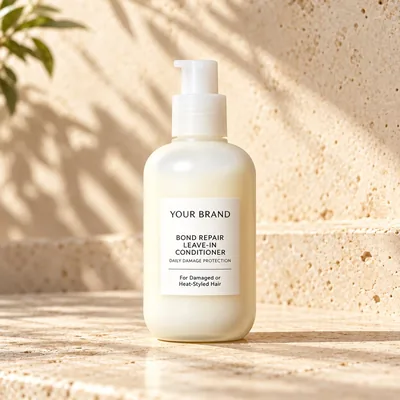
| Leave-in conditioner | Moisture and slip without rinsing, ideal for curls | Curl Hydration Leave-In Conditioner, Bond Repair Leave-In Conditioner |
| Styling cream | Defines curls and controls frizz | Flaxseed Curl Defining Cream |
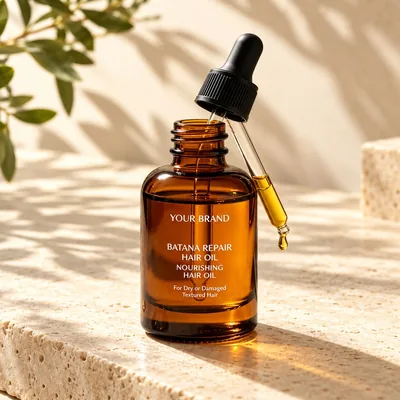
| Hair oil | Adds shine and softness to dry ends | Batana Repair Hair Oil |
| Hair treatment cap | Weekly mask step in a single-use format | Keratin Repair Hair Treatment Cap |
A repair trio such as the Bond Repair Shampoo with the Bond Repair Smoothing Conditioner and leave-in is a natural first launch for salons that do color and lightening. For textured hair, the Curl Hydration Leave-In Conditioner pairs well with a curl cream.
A hair serum for dry hair or a scalp product is the usual next step. Scalp care has its own rules, covered in our guide to scalp serums and scalp scrubs.
Sulfate-free, paraben-free and natural hair conditioner claims
“Sulfate-free” and “paraben-free” are factual ingredient claims: they are true only if the formula contains no sulfate surfactants or parabens. They say nothing on their own about whether a shampoo is gentle or effective.
A few practical points for brand owners:
- Sulfate-free shampoo suits dry, curly and color-treated hair and sensitive scalps, but a clarifying or exfoliating shampoo for build-up may still use a stronger surfactant.
- Paraben-free does not mean preservative-free. Every water-based shampoo and conditioner needs a preservative system that passes a challenge test.
- Natural hair conditioner claims need a clear definition, such as a natural-origin index calculated to ISO 16128, rather than a vague word on the front.
- Free-from claims must not imply that legally permitted ingredients are unsafe; several markets restrict that kind of wording.
Our guide to natural and clean claims explains how to word these honestly.
What about body shampoo for sensitive or dry skin?
“Body shampoo” is another name for a body wash: a liquid cleanser for the skin, not the hair. For sensitive or dry skin, look for mild surfactants, glycerin and barrier-friendly ingredients rather than strong foam.
Many hair care brands add a body wash to round out a bathroom range. Options such as the Niacinamide Body Wash are covered in our body wash and shower gel guide.
How to start your own hair product line
To start a hair care line, define your customer, choose a small core range, test samples, then finalize labels, packaging and market registration. The order matters, because each step depends on the one before.
- Pick your customer and channel. Salon back-bar and retail, barbershops, curl specialists, online direct-to-consumer or distributors each need different sizes and stories.
- Choose a core of three to five products. A shampoo, a matching conditioner and one hero leave-in, oil or scalp product is enough to launch.
- Request and test samples. Try them on several hair types, hard and soft water, and with your stylists.
- Decide on customization. Use a catalogue formula as-is, adjust fragrance or color, or brief a new ODM formula.
- Choose packaging. Pump bottles for the basin, squeeze tubes or flip-cap bottles for retail, refill pouches for sustainability-minded salons.
- Prepare label text. Product name, directions, warnings, full INCI list, batch code, shelf life or period after opening, and responsible person details for your market.
- Approve a digital proof, then move to volume production.
- Register the products where required (for example EU CPNP notification or a US MoCRA listing) as brand owner or importer.
How to find a hair care supplier you can trust
A trustworthy hair product supplier shows you documents, samples and process before asking for commitment. Ask every candidate the same questions so you can compare like with like:
- Are products made to cosmetic GMP (ISO 22716 / GMPC), with batch records?
- Can they supply an MSDS, a COA per batch and the full INCI list?
- Are standard formulas stability-checked, and what shelf life do they carry?
- Will they send samples before volume production and a digital proof before printing?
- Can they adjust fragrance, color or pack size, or develop a custom shampoo and conditioner?
Our article on how to choose a cosmetic manufacturer in China covers the full checklist, and the quality page shows how Mars documents each batch.
Launching your own shampoo and conditioner with Mars
Mars supplies private label hair care for salons, distributors and new brands from a catalogue of ready formulas, with custom work available through OEM and ODM development. A typical project looks like this:
- Choose from catalogue formulas: bond repair, volumizing, curl care, oils, treatment caps and scalp products.
- Samples first: test textures and fragrance on your clients before committing to artwork.
- Your branding: logo, artwork and label text in the languages your markets need, approved on a digital proof.
- Packaging options: bottles, pumps, tubes and outer cartons to suit back-bar and retail.
- Documents: MSDS, COA per batch on request and the full INCI list to support your market registration.
- Quality: made to cosmetic GMP (ISO 22716 / GMPC) with stability checks and a 3-year shelf life for standard formulas.
See how a salon group built its range in the salon scalp and hair care project, then request hair care samples to start testing.
Mars product team
Product specialists at Shanghai Mars Cosmetics Co., Ltd., Shanghai. Questions about this article? Contact us.