Formats
Aluminum free deodorant: what it means, how it differs from antiperspirant and how to private label it
Aluminum free deodorant explained: how it differs from antiperspirant, what natural deodorant ingredients do, and how to private label a deodorant line.

An aluminum free deodorant is an underarm product that controls odor without aluminum salts, the ingredients antiperspirants use to reduce sweat. It keeps you smelling fresh, but it does not keep you dry. That one distinction explains most of the confusion around “natural”, “clean” and “non-toxic” deodorants.
This guide explains what aluminum-free really means, how deodorant and antiperspirant differ, which ingredients and formats work, and how a brand can launch its own aluminum free deodorant line.
What does aluminum-free deodorant mean?
Aluminum-free deodorant means the formula contains no aluminum chlorohydrate, aluminum zirconium compounds or other aluminum salts. Without them, the product works only on odor, not on the amount you sweat.
Underarm odor is not caused by sweat itself, which is almost odorless. It comes from skin bacteria breaking down components of sweat. An aluminum-free deodorant works on this in a few ways:
- Odor neutralizers: zinc ricinoleate binds odor molecules.
- pH and bacteria balance: magnesium hydroxide, baking soda or mild acids make the skin surface less friendly to odor-causing bacteria.
- Absorbent powders: arrowroot, tapioca or corn starch help skin feel drier without blocking sweat.
- Fragrance: masks remaining odor and gives the product its character.
Deodorant vs antiperspirant: what is the difference?
A deodorant controls odor; an antiperspirant reduces sweat. Many products sold as “antiperspirant deodorant” do both, because they combine aluminum salts with fragrance and odor-control ingredients.
| Feature | Aluminum-free deodorant | Antiperspirant |
|---|---|---|
| Main job | Controls odor | Reduces wetness |
| Key actives | Magnesium hydroxide, zinc ricinoleate, powders, fragrance | Aluminum salts |
| How it works | Neutralizes and masks odor at the skin surface | Temporarily plugs sweat ducts |
| Regulatory status | Cosmetic in most markets | Cosmetic in the EU; over-the-counter drug in the US |
| Common formats | Cream, stick, roll-on, spray | Stick, gel, roll-on, aerosol |
| Suits | Odor control, sensitive skin, people avoiding aluminum | Heavy sweating, sport, hot climates |
This is why an “aluminum-free antiperspirant” is close to a contradiction. Products sold under that name are usually deodorants with extra powders that make skin feel drier.
Which deodorants contain aluminum?
Products labeled “antiperspirant” or “antiperspirant deodorant” contain aluminum salts; products labeled only “deodorant” usually do not. The quickest check is the ingredient list.
Look for these names in the INCI list or, in the US, the drug facts panel:
- Aluminum chlorohydrate
- Aluminum zirconium tetrachlorohydrex gly (and related zirconium compounds)
- Aluminum sesquichlorohydrate
- Potassium alum or ammonium alum, used in mineral “crystal” deodorants, which are also aluminum compounds
The last point surprises many shoppers: a crystal deodorant described as natural still contains an aluminum salt. A brand selling aluminum-free deodorant should therefore avoid alum and say so clearly on the pack.
Is aluminum-free deodorant better?
Aluminum-free deodorant is not better or worse than antiperspirant; it does a different job. The right choice depends on whether the user wants odor control alone or less sweat.
Regulators in major markets permit aluminum salts in antiperspirants at the levels used, so a responsible brand should not suggest that aluminum is dangerous. Good reasons customers choose aluminum-free deodorant include:
- They sweat lightly and only want to stay fresh.
- They dislike the feel of antiperspirant or the marks it leaves on clothes.
- They prefer simpler formulas or a “natural” positioning.
- They want a whole-body deodorant for areas where antiperspirants are not intended.
Customers switching from antiperspirant often notice more wetness at first, simply because sweat is no longer reduced. Explaining this honestly on pack and online reduces returns and disappointed reviews.
What makes a good natural deodorant?
A good natural deodorant controls odor through the day, feels comfortable on shaved skin and doesn’t leave sticky or white residue. “Natural”, “clean” and “non-toxic” are marketing words, not regulated definitions, so they need a clear explanation.
Points to check when developing or choosing a natural deodorant:
- Baking soda level: effective against odor, but high levels can irritate sensitive underarms.
- Magnesium-based options: magnesium hydroxide is a gentler alternative widely used in sensitive-skin deodorants.
- Fragrance load: a long lasting deodorant scent should still be kept at a comfortable level for daily use on thin skin.
- Texture: creams spread easily and suit whole-body use; sticks are quick and familiar.
- Claim wording: describe what the product does (“controls odor”, “aluminum-free”, “no added baking soda” if true) rather than calling other products “toxic”.
Our guide to natural, clean and non-toxic claims explains how to substantiate this kind of wording.
Which deodorant formats can a brand offer?
The main deodorant formats are cream, stick, roll-on, gel and spray, each with a different user experience and manufacturing route. Two are available as ready formulas in the fragrance and deodorant catalogue:
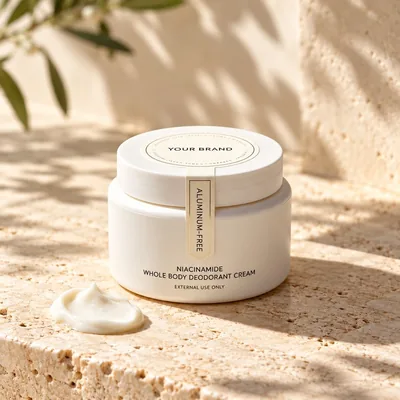
- Deodorant cream: the Aluminum-Free Whole Body Deodorant Cream (50 ml) is applied with fingertips and positioned for underarms and other areas prone to odor.
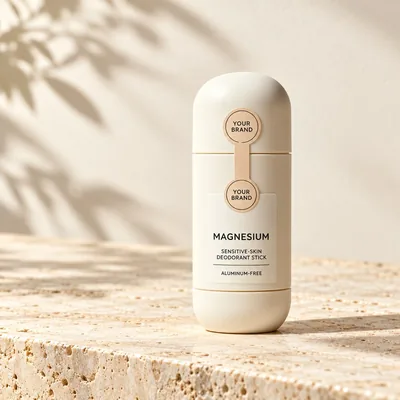
- Deodorant stick: the Magnesium Sensitive-Skin Deodorant Stick (50 g) is a magnesium-based, aluminum-free stick for sensitive skin.
- Deodorant spray: pump or aerosol sprays are not in the current catalogue; they can be developed as an ODM project, including valve and container testing.
- Gel antiperspirant and roll-ons: also possible through custom development, with antiperspirant actives requiring drug-level compliance in some markets.
Deodorant for men and women: what changes?
Men’s and women’s deodorants usually share almost the same base formula; the scent, pack design and size are what change. A brand can often launch one aluminum free deodorant base in two or three fragrance versions.
- Natural deodorant for men: woody, citrus, herbal or fresh aquatic scent families; matte, heavier packs.
- Natural deodorant for women: floral, soft musk, vanilla or fruity scents; lighter packaging.
- Unscented or lightly scented: important for sensitive skin and for customers who wear perfume.
Pairing a deodorant with a matching body wash or perfume oil creates a scent story; see our guide to scent strategy for body care.
How to choose the right deodorant type
Choosing a deodorant comes down to three questions: how much the person sweats, how sensitive their skin is, and which format they enjoy using.
- Odor only, light sweating: an aluminum-free deodorant cream or stick is enough.
- Heavy sweating or sport: an antiperspirant is the product designed to reduce wetness.
- Sensitive or freshly shaved skin: a magnesium-based formula with low fragrance is usually more comfortable than a high-baking-soda one.
- Whole-body use: a cream spreads easily on areas other than the underarms.
- Convenience: sticks are quick and mess-free; creams go a long way and travel well in small jars or tubes.
Launching your own aluminum free deodorant with Mars
Mars supplies private label deodorant cream and stick formulas, with sprays and other formats available as ODM development projects. A typical launch works like this:
- Choose a base: the whole-body cream, the magnesium stick or both.
- Choose scents: catalogue fragrance or a fragrance developed for your brand.
- Test samples on real users across seasons before committing to artwork.
- Brand it: logo, artwork and label languages, approved on a digital proof before printing.
- Receive documents: MSDS, COA per batch on request and full INCI list, made to cosmetic GMP (ISO 22716 / GMPC); see our quality standards.
Market registration, such as EU CPNP notification or a US MoCRA listing, is handled by the brand owner or importer using these documents. Request deodorant samples to compare the cream and stick yourself.
Mars product team
Product specialists at Shanghai Mars Cosmetics Co., Ltd., Shanghai. Questions about this article? Contact us.