Formats
Private label perfume: perfume oil vs eau de parfum vs solid perfume, explained
Private label perfume guide: how perfume oil, eau de parfum and solid perfume differ, fragrance oils vs essential oils, and how to launch your own fragrance.

Private label perfume is a fragrance developed and filled by a supplier and sold under your own brand. The first decision is not the scent but the format: eau de parfum, perfume oil or solid perfume. Each one changes how the fragrance feels on skin, how it is packed and which customer it attracts.
This guide explains how fragrance concentrations work, how perfume oil compares with eau de parfum and solid balm, the difference between fragrance oils and essential oils, and how to launch a private label perfume line.
What do perfume concentrations mean?
Perfume concentration is the share of fragrance compound in the finished product; the rest is usually alcohol and a little water. Higher concentrations generally feel richer and last longer on skin, though the scent itself matters as much.
| Type | Typical fragrance level | Base | Character |
|---|---|---|---|
| Extrait / parfum | About 20–30% or higher | Alcohol | Richest, smallest bottles |
| Eau de parfum (EDP) | About 15–20% | Alcohol | Full, long-wearing spray |
| Eau de toilette (EDT) | About 5–15% | Alcohol | Lighter, fresher |
| Eau de cologne / body mist | Below 5% | Alcohol and water | Light, refreshing, re-applied often |
| Perfume oil | Varies widely by brand | Carrier oil | Alcohol-free, close to the skin |
| Solid perfume | Varies by brand | Wax and butters | Portable, subtle, balm texture |
These ranges are industry conventions rather than legal definitions, so brands should describe their product accurately rather than rely on the name alone.
What is perfume oil, and what is it used for?
Perfume oil is a fragrance blended into a skin-friendly carrier oil instead of alcohol. It is usually applied from a roll-on bottle to pulse points such as the wrists, neck and behind the ears.
Common carrier oils for perfume include fractionated coconut oil (caprylic/capric triglyceride), jojoba and light esters, chosen because they are clear, nearly odorless and stable. The result is an oil based perfume that:
- has no alcohol sting, which suits dry or sensitive skin;
- stays close to the body, giving a personal, discreet scent;
- travels well in small roll on perfume oil bottles;
- can be layered with body oils, lotions and unscented products.
The Vanilla Amber Perfume Oil (30 ml) is an example from the Mars catalogue. Perfume oils for women and perfume oil for men differ mainly in scent family; the base is the same. Hair perfume oil and body oil fragrance products are lighter variations that can be developed as ODM projects.
Perfume oil vs eau de parfum: which lasts longer?
Neither format always lasts longer; the fragrance notes matter most. Perfume oil evaporates slowly and stays close to the skin, while eau de parfum projects further at first and then softens.
- Projection: EDP fills more space around the wearer; oil is noticed mainly up close.
- Wear on skin: oil tends to feel long lasting to the wearer because it evaporates slowly; EDP top notes fade sooner.
- Experience: EDP is the classic spray ritual and suits gifting; oil feels personal and natural.
- Notes: base notes such as amber, vanilla, musk and woods last longest in any format.
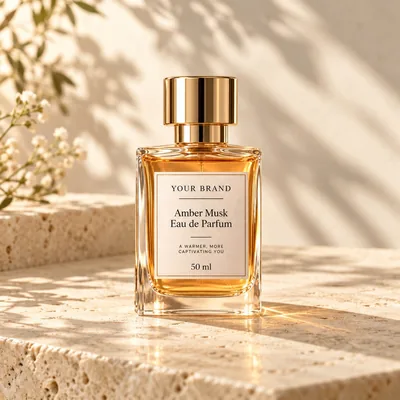
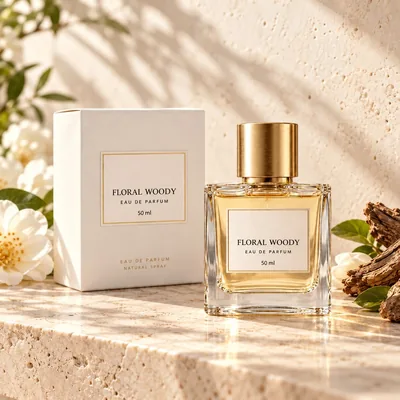
The catalogue includes two alcohol-based options: the Amber Musk Eau de Parfum (50 ml) and the Floral Woody Eau de Parfum (30 ml). Offering the same scent story as an EDP and an oil lets customers choose their preferred way to wear it.
Where does solid perfume fit?
Solid perfume is fragrance set in a balm of waxes and butters, applied with a fingertip. It is subtle, spill-proof and pocket-sized, which makes it a strong gift and travel item.
The Vanilla Caramel Solid Perfume Balm (20 g) shows how a gourmand scent works in this format. Solid balms also suit brands focused on skincare, because the texture feels like a nourishing product rather than a classic perfume.
Fragrance oils vs essential oils: what is the difference?
Essential oils are aromatic oils extracted from a single plant; fragrance oils are compounded blends created by perfumers from aroma molecules and natural materials. Most fine fragrances use both.
- Essential oil fragrances appeal to “natural” positioning but offer a narrower palette and can vary from harvest to harvest.
- Fragrance oils give a wider range of notes, more consistency and scents that do not exist in nature, such as many musks and gourmand accords.
- Safety rules apply to both: fragrance materials are used within IFRA standards, and many markets require labeling of specific fragrance allergens above set thresholds.
- “Natural” fragrance claims need substantiation, for example a natural-origin calculation; see our guide to natural and clean claims.
Fragrance ingredients are listed as “parfum” or “fragrance” in the INCI list, followed by any allergens that must be declared individually.
How does custom fragrance development work?
Custom fragrance development is an ODM project in which a perfumer creates an original scent from your brief. It suits brands that want a signature scent across perfume, body care and deodorant.
- Write the brief: mood, customer, scent family, key notes, format and markets.
- Review submissions: several scent directions are presented for smelling on blotters and skin.
- Refine: adjust one or two favorites until the scent matches the brief.
- Test in the base: check the scent in alcohol, oil or balm, plus stability and color.
- Confirm compliance: IFRA conformity, allergen declarations and label text for each market.
Mars does not create copies or “inspired by” versions of existing branded fragrances. A personalized fragrance should be original, so your brand can own the scent and the story. The OEM and ODM page explains how custom projects run.
How to choose the right format for your fragrance line
Choose the format by customer and channel: eau de parfum for gifting and classic perfume shoppers, perfume oil for skincare-minded and sensitive-skin customers, and solid balm for travel and add-on sales.
- Beauty and gift retail: an EDP in a weighty bottle is the expected hero.
- Wellness, spa and skincare brands: perfume oil fits a ritual-led, alcohol-free story.
- Online and impulse sales: solid perfume and small roll-ons ship easily and suit discovery sets.
- Shipping: alcohol-based perfumes are flammable and need dangerous-goods handling, while oils and balms are usually simpler to ship.
Perfume packaging and presentation
Fragrance is bought with the eyes as much as the nose, so the bottle, cap and box carry much of the luxury fragrance feel. Plan packaging alongside the scent, not after.
- Eau de parfum: glass spray bottle, crimped or screw pump, heavy cap, rigid perfume box.
- Perfume oil: glass roll-on or dropper bottle in a slim carton.
- Solid perfume: metal tin, compact or twist-up case.
- Labels: product name, concentration, volume, INCI with allergens, warnings such as flammability for alcohol products, batch code and responsible person.
Our packaging and labels guide covers artwork and label rules in more detail.
Launching your own private label perfume with Mars
Mars supplies private label perfume in three formats from the fragrance and deodorant catalogue: eau de parfum, perfume oil and solid perfume balm, with custom scents available as ODM projects.
- Start from catalogue scents to launch quickly, then add a custom signature fragrance.
- Samples first so you can wear-test each format.
- Your branding: logo, artwork and label languages, approved on a digital proof before printing.
- Documents: MSDS, COA per batch on request and full INCI list with allergens, made to cosmetic GMP (ISO 22716 / GMPC).
Request fragrance samples to compare perfume oil, eau de parfum and solid balm side by side.
Mars product team
Product specialists at Shanghai Mars Cosmetics Co., Ltd., Shanghai. Questions about this article? Contact us.