Private label
Cosmetic packaging and labels: containers, materials, decoration and label basics
Cosmetic packaging guide: jars, bottles, airless pumps, droppers, tubes and boxes, glass vs PET, PP and PE, decoration options and what cosmetic labels include.

Cosmetic packaging is everything that holds, protects, dispenses and presents a skincare product: the container and closure, any outer box, and the labels and printing that carry your brand and legally required information. Good packaging protects the formula, works well in the hand and makes the product instantly recognizable. This guide covers containers, materials, decoration and the basics of cosmetic labels.
It is written for private label and ODM brands choosing packaging for the first time. Label content rules differ by market, so read the label section as general guidance, not legal advice.
What is cosmetic packaging made of?
Cosmetic packaging has three layers: primary packaging that touches the product, secondary packaging such as boxes, and shipping packaging such as export cartons.
- Primary: jars, bottles, tubes, airless pumps, droppers, ampoules, vials and sachets.
- Secondary: folding boxes, gift boxes, inserts, leaflets and shrink wrap.
- Shipping: export cartons and pallets that keep products safe in transit.
Primary packaging matters most for the formula; secondary packaging matters most for shelf presence and the information you need to fit.
Which cosmetic containers suit which product?
Match the container to the formula’s texture, sensitivity and how customers use it.
| Container | Suits | Why |
|---|---|---|
| Cosmetic jars | Rich creams, balms, masks, scrubs | Easy to scoop thick textures; premium feel, especially glass |
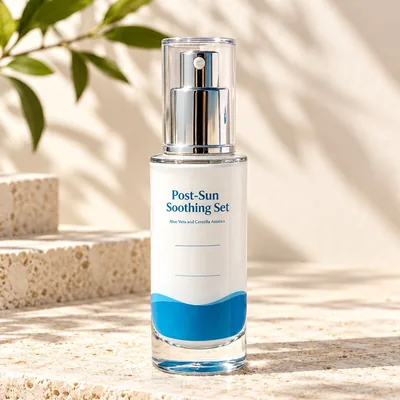
| Pump bottles | Lotions, cleansing oils, body washes | Clean, measured dispensing |
| Airless pumps | Serums and creams with sensitive actives | Limits air contact and contamination |
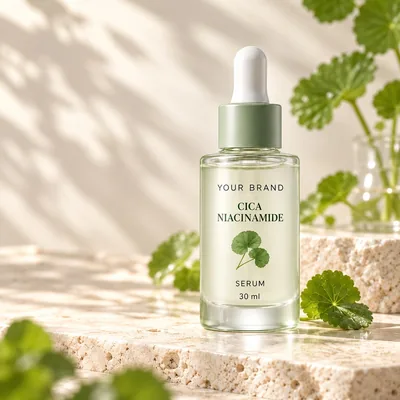
| Dropper bottles | Serums, facial oils, ampoules | Precise drops of fluid textures |
| Tubes | Cleansers, hand cream, gels, eye cream | Hygienic, portable, squeeze to the last drop |
| Sachets and single doses | Samples, travel size, sheet masks | Trial, gifting and hotel or spa use |
| Ampoules and vials | Concentrates, two-part powder and liquid kits | One dose per use, kept fresh until opened |
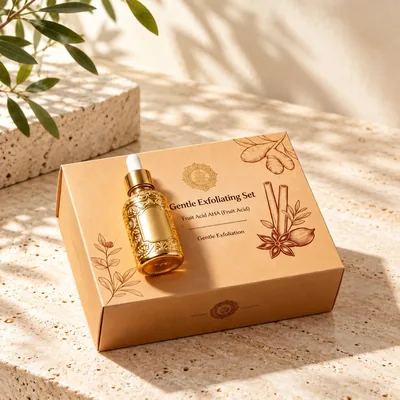
| Boxes | All products, gift sets | Protection, shelf presence, space for information |
Travel-size containers and sachets are useful for sampling and hospitality channels. For a product’s main shelf size, standard sizes such as 30 ml serums, 50 g creams and 200 ml toners are familiar to customers.
Glass vs plastic: glass, PET, PP and PE
Glass feels premium and is chemically inert; plastics such as PET, PP and PE are lighter and tougher in transit.
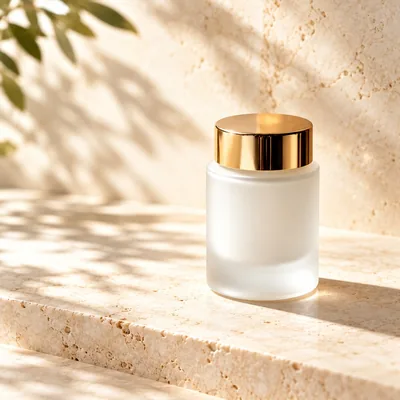
- Glass: glass cosmetic jars and bottles suit serums, oils and creams positioned as premium. Amber or frosted glass adds light protection and a tactile finish. Heavier, so consider shipping and breakage.
- PET: clear and light, widely used for toners, lotions and cleansers in plastic bottles and jars.
- PP: sturdy and heat-resistant; common for jars, caps, closures and airless components.
- PE: flexible and squeezable, the usual choice for tubes and soft bottles.
Recycled content and mono-material designs are increasingly requested; check that any alternative material still passes compatibility testing with your formula.
Why packaging compatibility matters
Compatibility testing confirms the formula and container don’t react with each other over the product’s life.
Some oils can soften certain plastics, some actives discolor in clear packs exposed to light, and some pumps struggle with thick textures. Stability checks in the final pack catch leaks, color changes, weight loss and dispensing problems before production. Choose the pack before final testing, not after.
Function matters as much as chemistry. Check that pumps prime quickly and dispense a sensible dose, that droppers draw up the full pipette, that caps seal tightly for shipping and that tubes don’t crack at the crimp. If you plan to sell travel sizes or kits, test those packs too, and think about how customers will carry them; a well-sealed tube travels far better than a loose jar lid.
Decoration: screen printing, hot stamping and labels
Decoration is how your brand gets onto the pack: printing directly on the container, applying a label, or decorating the box.
- Screen printing: ink printed directly onto glass or plastic; durable and clean, suited to simple designs with few colors.
- Hot stamping: metallic foil (gold, silver, rose gold) pressed onto the surface for logos and accents.
- Labels: printed self-adhesive labels on paper or film, flexible for many colors, small runs and language versions.
- Sleeves and coatings: shrink sleeves, spray coatings and frosting change the whole look of a standard container.
- Box finishes: embossing, spot UV and foil on printed cosmetic boxes.
What goes on cosmetic labels?
Cosmetic labels typically need the product name and function, ingredient list, net content, batch number, durability information, warnings and responsible-company details, in the local language. Requirements vary by market; this is a general overview.
- Product name and function, unless obvious from the presentation.
- Ingredient list using INCI names, in descending order of concentration.
- Net content by weight or volume (g or ml; some markets also require oz).
- Batch number for traceability.
- PAO or expiry: a period-after-opening symbol, or a best-before date for shorter-life products.
- Warnings and precautions, such as “for external use only” or “avoid contact with eyes”, where needed.
- Responsible company name and address, and country of origin where required.
- Language: mandatory text in the language or languages of each sales market.
Where the container is too small, some information can go on the box or an attached leaflet, depending on local rules. Our cosmetic compliance guide explains who is responsible for what.
How to design a label for a bottle or jar
Good product label design starts from the dieline and the required text, then adds brand elements around them.
- Get the dieline from your supplier: exact size, curve, safe zone and bleed.
- Place the required text first so it stays legible at actual size.
- Add logo, product name and design, keeping one consistent system across the range.
- Supply vector artwork for labels, with outlined fonts, CMYK or spot colors and bleed.
- Check the digital proof line by line, then approve in writing.
Any label design program can produce artwork, but print-ready files and a careful proof check matter more than the tool. A few label design ideas that work well for skincare: keep the front panel to brand, product name and one benefit line; use color or a number system to separate products in the same range; and put the routine step on the pack so customers know where each product fits. Plan multi-language versions early, as translated text often runs longer than English.
Packaging your private label range with Mars
Mars, a Shanghai-based private label and ODM skincare supplier, helps brands match each formula with suitable packaging, decoration and label languages. Production is made to cosmetic GMP (ISO 22716 / GMPC), with stability checks in the chosen pack.
- Catalogue formats include 30 ml serums such as the radiant lotus serum, 50 g creams such as the 24H multi-hyaluronic hydration cream, 200 ml toners and boxed skincare sets.
- Logo, artwork and label languages for your markets, with a digital proof before printing.
- Full INCI list, MSDS, and COA per batch on request, to support your label and registration.
- Custom packaging and formulas through our OEM and ODM service.
Planning a new line? Read how to start a skincare line, or request samples to see textures and packs together.
Mars product team
Product specialists at Shanghai Mars Cosmetics Co., Ltd., Shanghai. Questions about this article? Contact us.