Formats
Sheet mask manufacturer guide: collagen masks, hydrogel face masks and clay masks for your brand
What a sheet mask manufacturer makes: collagen sheet masks, hydrogel face masks and clay masks, how each format works, and how to launch private label masks.

A sheet mask manufacturer produces single-use face masks soaked in serum and sealed in pouches, and most also make hydrogel face masks and wash-off clay masks. For a brand, the choice of mask format shapes the feel, the story and the packaging of the product. This guide explains collagen masks, hydrogel masks and clay masks, and what to look for in a mask supplier.
What types of face masks can a sheet mask manufacturer make?
Most mask suppliers work with three families: serum-soaked sheet masks, hydrogel masks and rinse-off cream or clay masks. Each suits a different customer, channel and routine.
| Format | How it works | Feel | Typical pack |
|---|---|---|---|
| Sheet mask | Fabric or fiber sheet soaked in serum | Wet, light, refreshing | Single pouch, box of five or ten |
| Hydrogel face mask | Gel sheet holding serum in its structure | Cool, clingy, no drips | Single pouch, often two-piece |
| Clay face mask | Clay paste that absorbs oil, then rinses off | Creamy, dries matte | Tube or jar |
| Patches | Small gel or hydrocolloid pads for one area | Targeted, discreet | Jar or sheet of patches |
How sheet masks are made
Sheet masks are cut from a substrate, folded, soaked with a measured dose of serum and sealed in a pouch. The substrate and the serum define the product.
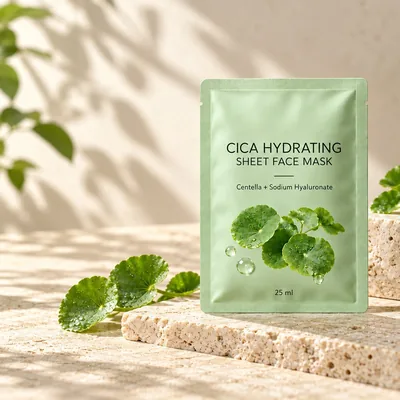
Common substrates include cotton-type nonwovens, cupro, lyocell fibers and bio-cellulose. Thinner, finer fibers cling better and feel more premium. The serum is usually an essence of humectants such as glycerin and hyaluronic acid with one hero ingredient. Mars’s Cica Hydrating Sheet Mask, for example, carries 28 ml of centella-based serum per mask, enough for the customer to pat the excess into the neck and hands.
What does collagen in a face mask do?
Collagen in a face mask hydrates and softens the skin surface. It does not penetrate deeply or replace the collagen in the skin, and accurate marketing says so.
Most collagen masks use hydrolyzed collagen, broken into smaller pieces that dissolve easily in the serum. It works as a humectant and light film-former: skin feels smoother and looks plumper and more hydrated after use. That is why a collagen mask for dry skin is popular, and why collagen pairs well with peptides and hyaluronic acid. The Collagen Peptide Hydrating Sheet Mask follows this approach. A facial mask with collagen can also be made in vegan form using plant-derived alternatives, which is worth considering for some markets.
What is a hydrogel face mask?
A hydrogel face mask is a jelly-like gel sheet that holds serum inside its structure, so it clings to the face, feels cool and doesn’t drip. Shoppers also call it a hydro face mask or hydrogel sheet mask.
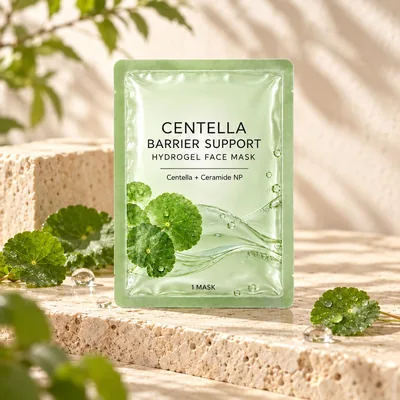
The gel is cast into a mold, cut to shape and laid on a protective film, usually as an upper and lower piece for a closer fit. Hydrogel feels premium, travels well and photographs well, which makes it a favorite for gifting and social media. Mars lists the Centella Barrier Hydrogel Face Mask and a Vacuum-Sealed Hydrogel Face Patch; the same gel is used for hydrogel under eye patches.
Clay face masks: kaolin and pore masks
A clay face mask is a rinse-off paste that absorbs excess oil and lifts impurities from the skin surface. Kaolin is the gentlest and most widely used clay.
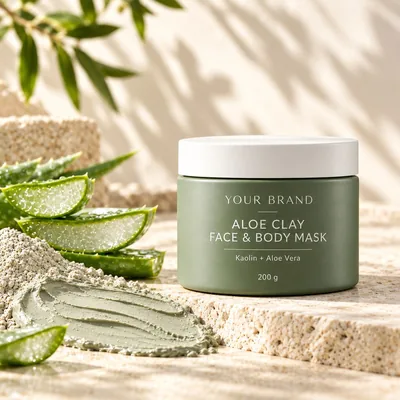
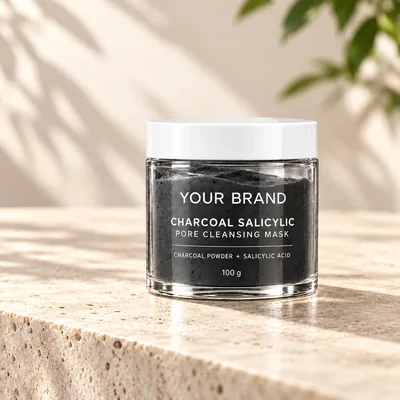
Kaolin clay face masks suit oily and combination skin and are often positioned as a face mask for clogged pores or for glowing skin after cleansing. Mars offers the Aloe Vera & Kaolin Face and Body Mask and a Charcoal & Salicylic Pore Mask. White clay mask formulas can also be made more hydrating with aloe, glycerin or plant oils. Our clay mask guide covers pores, blackheads and oily skin in detail.
How to choose a sheet mask manufacturer
Choose a face mask manufacturer by what it actually produces, how it documents quality, and whether you can test before committing. These checks help:
- Formats in range: confirm the supplier makes the sheet, hydrogel or clay formats you need, not just one.
- Substrate options: ask which fabrics and gel types are available and request samples of each.
- Serum dose and fit: check how much serum each mask holds and how well the shape fits different faces.
- Packaging: look at pouch materials, finishes (matte, gloss, foil) and the outer box.
- Quality documents: ask for production to cosmetic GMP (ISO 22716 / GMPC), batch records, MSDS and COA per batch, and a full INCI list.
- Samples before volume: a reliable supplier sends samples and a digital proof before production.
Our guide to choosing a cosmetic manufacturer in China goes deeper into supplier checks.
How to use a sheet mask
Apply a sheet mask to clean skin after toner, leave it on for 15 to 20 minutes, then remove it and pat in the remaining serum.
- Cleanse and tone so the serum meets clean skin.
- Unfold the mask and align the eye and mouth openings first, then smooth it outwards.
- Relax for 15 to 20 minutes; removing it before it dries keeps skin from feeling tight.
- Pat in the leftover serum on the face, neck and hands.
- Finish with moisturizer to seal in hydration.
Printing these steps on the back of the pouch helps first-time users and makes the product feel more complete.
What you can customize in a private label face mask
In a private label face mask, the serum, scent, pouch artwork, box and label languages are usually customizable; through ODM, the material and shape can change too.
- Formula: start from a catalogue serum or adjust the hero ingredient.
- Material and shape: fabric type, hydrogel thickness, one-piece or two-piece masks.
- Pouch: printed artwork, finish and tear notch; a clear window is possible for some formats.
- Outer pack: single masks, boxes of five or ten, or mixed sets.
Salons, spas and hotels often prefer plain, elegant pouches that suit treatment rooms and guest amenities, while retail brands lean on bold artwork that stands out on a shelf or in a social feed. Decide on the channel before the pouch design. A customized face mask range often starts with two formulas, such as a hydrating collagen mask and a calming centella mask, then grows with seasonal or clay options.
Launching your own face masks with Mars
Mars supplies sheet masks, hydrogel face masks, clay masks and patches that brands can launch under their own label from the masks and patches range.
- Choose formulas from the catalogue, or develop a new serum or mask shape through OEM and ODM development.
- Test samples first, then approve a digital proof of the pouch and box before printing.
- Receive documents: products are made to cosmetic GMP (ISO 22716 / GMPC), with stability checks, a standard 3-year shelf life for catalogue formulas, MSDS and COA per batch on request, and a full INCI list. Market registration remains the brand owner’s or importer’s responsibility, supported by these documents.
To compare fabrics and gels in hand, request face mask samples.
Mars product team
Product specialists at Shanghai Mars Cosmetics Co., Ltd., Shanghai. Questions about this article? Contact us.