Ingredients
Eye cream for dark circles: what it can and can’t do for puffiness, fine lines and creases
An honest guide to eye cream for dark circles, puffiness and fine lines: what causes them, which ingredients help, and how brands build an eye care line.

An eye cream for dark circles is a gentle, usually fragrance-free cream formulated for the thin skin around the eyes, designed to help the area look brighter, more hydrated and less puffy. It can soften the look of shadows and fine lines, but it cannot change genetic pigmentation, visible blood vessels or hollows. This guide explains what eye creams honestly do, which ingredients matter, and how a brand can build an eye care line.
What is an eye cream for dark circles?
It is a leave-on cream or gel made for under-eye skin, with brightening, hydrating and depuffing ingredients at eye-safe levels. Under-eye skin is thinner than the rest of the face and has fewer oil glands, so it dries out and shows fatigue faster.
That is why eye products are usually lighter, lower in fragrance and packed in smaller, more hygienic containers than face creams. Shoppers search for this category in many ways — “circle eye cream”, “cream for black rings under eyes”, “under eye black cream” — but they mean the same thing: something to make tired eyes look fresher.
What causes dark circles and under-eye bags?
Dark circles have several causes, and only some of them respond to skincare. Being honest about this is the most useful thing a brand can do for its customers.
| Cause | What it looks like | What a cosmetic can do |
|---|---|---|
| Thin, dehydrated skin | Bluish or purple shadow, crepey texture | Hydration and emollients help skin look plumper and smoother |
| Surface pigmentation | Brown tone, often after sun or rubbing | Brightening ingredients can help the area look more even over time |
| Genetic pigmentation | Brown or dark rings present since youth | Very little; concealer is the practical answer |
| Hollows (tear trough) | Shadow cast by the shape of the face | Nothing structural; light-reflecting textures can soften the look |
| Morning fluid puffiness | Soft swelling that settles during the day | Cooling and caffeine help reduce the look of puffiness temporarily |
| Fat pads (eye bags) | Lasting bulge below the lower lid | Nothing structural; this is a question for a doctor |
Lack of sleep, allergies, rubbing the eyes and sun exposure make most of these look worse. Persistent swelling, sudden changes or one-sided darkness should be checked by a doctor or dermatologist.
What can an eye cream do, and what can’t it?
An eye cream can help the under-eye area feel hydrated, look smoother and look brighter; it cannot remove bags, fill hollows or change inherited pigment. Good marketing reflects that difference.
- Can: help skin feel hydrated, soften the look of fine lines and creases, reduce the look of morning puffiness, help the area look more even and radiant, and support the skin barrier.
- Can’t: act as a medical dark circle treatment, lift sagging lids, remove fat pads or change bone structure.
Copy such as “visibly brighter-looking eyes” and “helps reduce the look of puffiness” is accurate and compliant. Avoid percentages, timelines and words that suggest a medical effect.
Which ingredients go into a good eye cream?
A good eye cream pairs one or two targeted ingredients with a gentle, hydrating base. These are the workhorses:
- Caffeine: the classic depuffing ingredient; it helps reduce the look of puffiness and is the hero of most caffeine eye serum and balm formats.
- Vitamin C derivatives and niacinamide: the backbone of a brightening eye cream, helping skin look more even and radiant.
- Peptides: used in eye wrinkle cream and firming formulas to help skin look smoother and more supple.
- Hyaluronic acid: draws water into the surface layers, the basis of any hydrating eye cream.
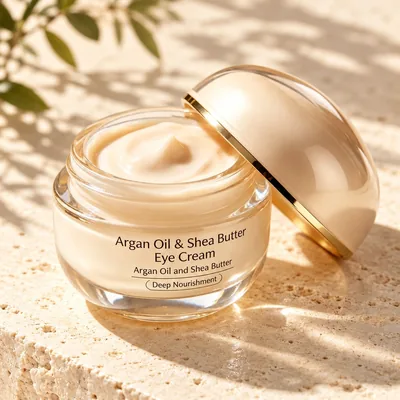
- Ceramides, squalane and shea butter: emollients that support the barrier and help a moisturizing eye cream feel comfortable overnight.
- Bakuchiol: a plant-derived ingredient often chosen as a gentler alternative in renewal-style eye products.
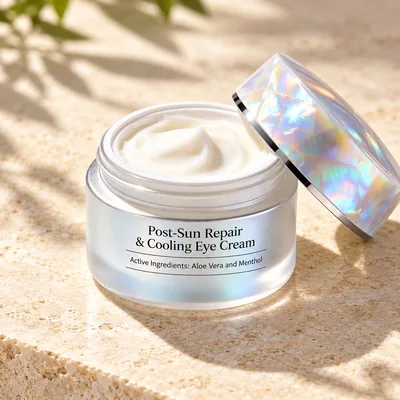
- Green tea and aloe: soothing botanicals that suit sensitive and after-sun formulas.
Eye cream, eye serum, balm stick or patches: which format?
Each format suits a different moment in the routine, and a complete line usually offers two or three of them.
| Format | Texture | Best moment | Example from Mars |
|---|---|---|---|
| Eye cream | Rich, cushiony | Night, dry or mature skin | Collagen & Keratin Firming Eye Cream |
| Eye serum | Light, fast-absorbing | Morning, under makeup | Vitamin C & Niacinamide Brightening Eye Serum |
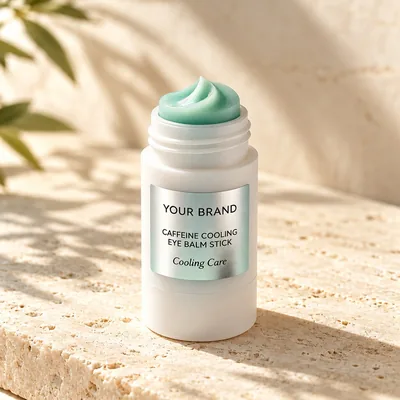
| Balm stick | Solid, cooling glide | Morning puffiness, on the go | Caffeine Cooling Eye Balm Stick |
| Eye ampoule | Concentrated fluid | Targeted boost, salons | Peptide Concentrate Eye Ampoule |
| Hydrogel patches | Cooling gel pad | Before events, self-care | Green Tea & Caffeine Hydrogel Eye Patches |
Eye oils, such as a squalane and bakuchiol blend, are a fourth option for customers who prefer a nourishing night step.
What is the best product for under-eye puffiness?
For morning puffiness, a cooling caffeine product with a massage applicator is the most effective cosmetic option. The cold, the gentle pressure and caffeine together help the area look less puffy for the day.
Balm sticks and roller applicators suit this job well because the customer can glide them on without pulling the skin. Chilled hydrogel patches are the other popular choice; our guide to under eye patches and hydrogel eye patches covers how they work. For an eye cream for dark circles and puffiness together, a light gel-cream that combines caffeine with a brightening ingredient covers both concerns in one step.
Eye creams for fine lines, creases and mature skin
For fine lines and creases, the most useful eye creams combine hydration, emollients and peptides. Plumper, well-moisturized skin shows lines less, and a richer texture stops makeup from settling into creases.
Customers in their forties and fifties often want an anti-aging eye cream that feels comforting rather than light. Shea, argan oil, squalane and ceramides give that cushion. A firming eye cream can help skin look smoother and more supported, but it does not lift or tighten in a structural sense, and copy should say so. Brands building a full routine can read our overview of peptides, bakuchiol and retinol for matching face products.
How to formulate an eye cream for sensitive skin
An eye cream for sensitive skin keeps the ingredient list short, avoids added fragrance and essential oils, and uses eye-area-appropriate levels of actives.
- Remove fragrance first. It is the most common reason customers stop using an eye product.
- Choose gentle brighteners. Stable vitamin C derivatives and niacinamide are easier on the eye area than strong acids.
- Prefer closed packaging. Tubes, airless pumps and roller tips keep fingers out and the formula stable.
- Plan the safety file. The cosmetic safety assessment should specifically cover use near the eyes.
Launching your own eye care line with Mars
Mars supplies ready-to-brand eye creams, serums, oils, balm sticks and hydrogel patches that you can launch under your own label. Most brands start from the catalogue and adjust the story, scent and packaging.
- Choose formulas from the eye care range, from nourishing creams to the cooling caffeine stick.
- Test samples first, then approve a digital proof of your logo and artwork before printing, with label languages for your markets.
- Pick packaging such as tubes, jars, airless pumps or roller formats.
- Receive documents: products are made to cosmetic GMP (ISO 22716 / GMPC) with batch records, MSDS and COA per batch on request, and a full INCI list to support your market registration.
For changes to texture or actives, see how OEM and ODM development works, then request eye care samples to compare formats side by side.
Mars product team
Product specialists at Shanghai Mars Cosmetics Co., Ltd., Shanghai. Questions about this article? Contact us.