Ingredients
Exosome serum for the face: exosome facials, at-home serums, microneedling and what to look for
What an exosome serum is, how exosome facials and at-home exosome serums differ, how they fit around microneedling and what to check before you brand one.

An exosome serum is a skincare product built around exosomes — tiny vesicles, a fraction of a micron across, derived in cosmetics from sources such as cucumber, ginseng, turmeric or milk. For the face, exosome products come in two main forms: professional kits used in exosome facials and after in-clinic treatments, and at-home ampoules for a regular routine. This guide focuses on those face products: how they are used, what they can honestly offer and what to look for in a formula.
What are exosomes in skincare?
Exosomes are nano-sized, membrane-bound vesicles that cells release naturally. In skincare, they are used as cosmetic ingredients in serums designed to help skin feel hydrated and comfortable and look radiant.
Most cosmetic exosomes on the market are plant-derived or milk-derived. If you want to understand the sources themselves — how cucumber, ginseng, turmeric, hop and milk exosomes differ — see our buyer’s guide to plant exosomes. Here we look at the finished products people put on their face.
What types of exosome products are made for the face?
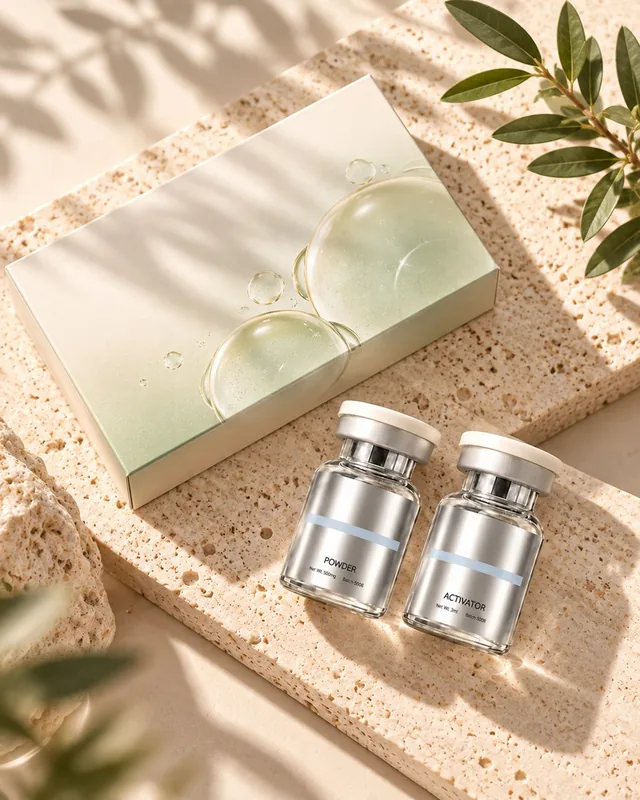
Exosome products for the face fall into four groups: professional vial kits, at-home ampoules, ready-to-use liquid serums, and creams or masks that contain exosomes as one ingredient.
| Format | How it works | Typical user |
|---|---|---|
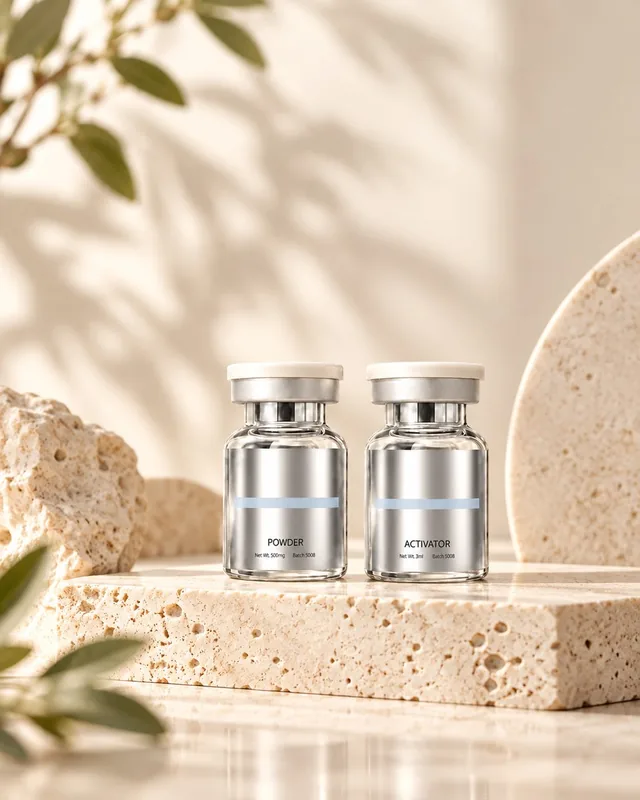
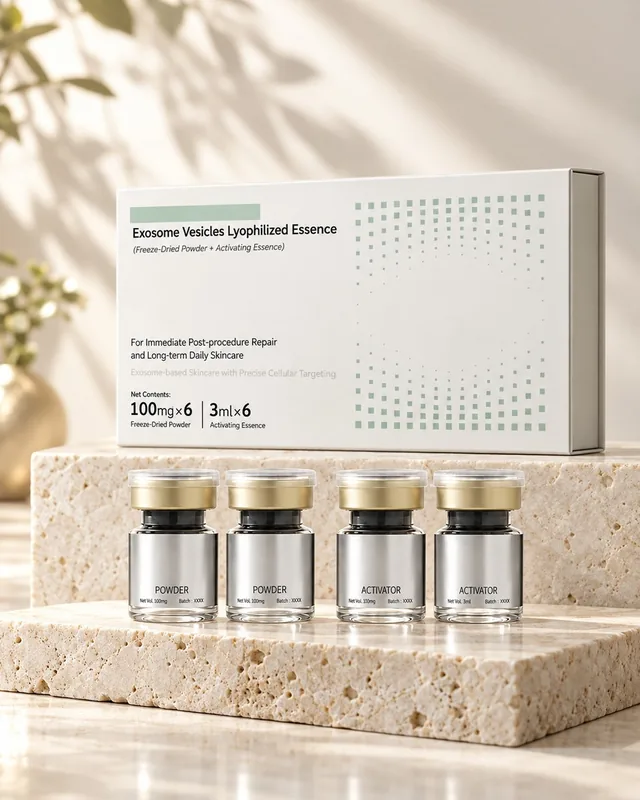
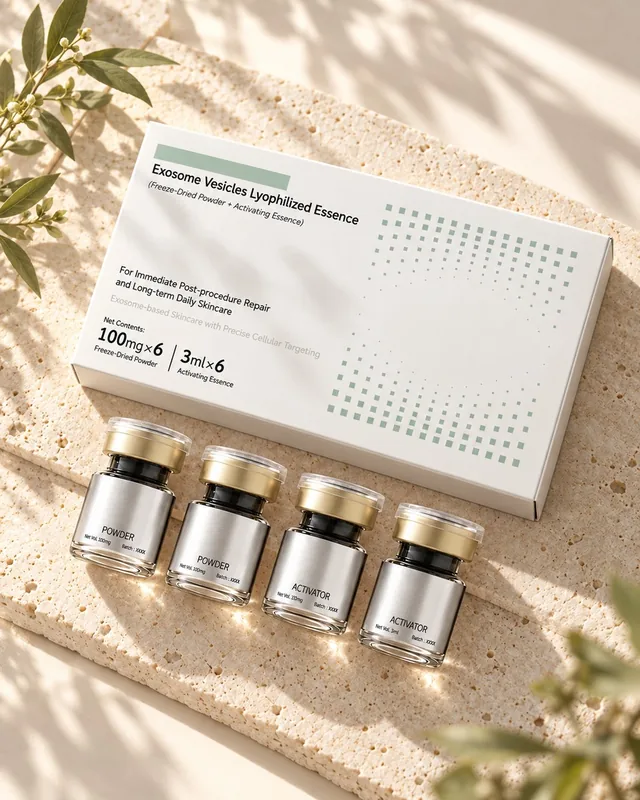
| Professional vial kit | Freeze-dried powder plus a larger diluent, mixed for one facial | Clinics, med spas, estheticians |
| At-home ampoule kit | Smaller powder-and-liquid sets for a course of home use | Consumers, retail and spa take-home |
| Ready-to-use liquid exosome serum | Pre-mixed serum in a dropper or pump | Daily routines, convenience |
| Exosome cream or mask | Exosomes as one ingredient in a moisturizer or sheet mask | Gentle entry point, gifting |
The freeze-dried formats are the most common in professional exosome skincare because the powder stays stable until it is activated. Our comparison of lyophilized vs liquid exosome serum explains the trade-offs in detail.
What is an exosome facial?
An exosome facial is a professional treatment in which an esthetician or clinic applies a freshly mixed exosome serum as part of a cleansing, exfoliating, masking and finishing protocol. It is a cosmetic facial, not a medical procedure.
- Cleanse and prep: double cleanse and gentle exfoliation.
- Activate the kit: mix the lyophilized powder with its diluent just before use.
- Apply the exosome serum: pressed in by hand, or with a device the professional uses.
- Mask: a hydrogel or sheet mask helps the serum stay on the skin longer.
- Finish: moisturizer and, in the daytime, sunscreen.
- Take-home: many spas sell ampoules so clients can continue at home.
Clients usually describe the result as skin that feels calm, hydrated and looks glowing — the realistic promise of an exosome facial treatment.
How to use an at-home exosome serum
An at-home exosome serum is used like any concentrated serum: on clean skin, before moisturizer, from a freshly mixed ampoule. Most kits are designed as a course of several uses.
- Mix: combine the powder and liquid, cap and shake gently until clear.
- Apply: press a few drops into the face and neck after toner.
- Seal: follow with a moisturizer.
- Store: once mixed, follow the pack’s instructions and use within the stated time.
- Combine sensibly: exosomes layer well with hydrating serums; use strong acids or retinol on different evenings if skin is sensitive.
Smaller ampoule kits, such as the Ginseng Exosome Ampoule — Firming & Radiance (30 mg + 1.5 ml sets), suit this kind of home course.
Do exosome serums really work?
Exosome serums can help skin feel hydrated, soothed and comfortable and look more radiant, but they are cosmetics, not therapies. Research on topical exosomes is still young, and results vary widely between products.
Searches such as “exosome therapy for skin rejuvenation” reflect how the ingredient is often marketed, not what a cosmetic can claim. A responsible brand describes the experience customers can see and feel — a fresh, dewy look and calmer-feeling skin after a facial or during a home course — and leaves medical language out. The quality of the source, the particle data and the rest of the formula explain most of the difference between a good exosome serum and a disappointing one, which is why the checklist below matters.
Exosomes and microneedling: how they are used together
In professional settings, exosome serums are often used as part of the aftercare routine around microneedling and similar in-clinic treatments, to help skin feel soothed, hydrated and comfortable. The practitioner decides what is applied and when.
That last point matters. Microneedling is a professional procedure, and the timing and products used afterwards should follow the clinic’s protocol and hygiene standards. Brands selling into this channel need clear directions, single-use packaging and honest wording such as “post-procedure comfort” rather than claims about results of the procedure. Our exosome aftercare protocol for microneedling and laser covers how clinics structure this. Mars’s Milk Exosome Vial Kit — Post-Microneedling Aftercare & Barrier Defense is an example built for that channel.
What to look for in an exosome serum
Look for a clearly stated exosome source, particle data from the supplier, fresh-mix packaging, a clean supporting formula and cosmetic claims that do not overpromise.
- Source: the label or product page should say which plant or milk the exosomes come from.
- Particle data: serious suppliers can share particle size and concentration from methods such as NTA and TEM; see reading exosome particle data on a COA.
- Format: lyophilized powder kits keep actives stable; liquids should come in protective packs.
- Supporting ingredients: hyaluronic acid, panthenol, peptides or soothing extracts that match the story.
- Allergens: milk-derived products should be clearly labeled for customers with dairy sensitivities.
- Claims: “helps skin feel hydrated”, “visibly radiant”, “comforting after professional treatments” — not regeneration, repair of tissue or medical results.
Choosing an exosome serum line for your brand
Choose the exosome source by the customer’s main concern: cucumber for cooling hydration and redness-prone skin, milk for barrier comfort and brightening, ginseng for firming and radiance stories.
- Cucumber exosome vials: cooling, hydrating and after-sun positioning, such as the Cucumber Exosome Vial Kit — Hydration.
- Milk exosome vials: barrier comfort, brightening and med-spa aftercare.
- Ginseng exosome ampoules: firming-look, anti-fatigue and radiance routines for home use.
- Turmeric curcumin exosome vials and mixed professional collections: sensitive-skin and multi-step clinic programs.
Browse the full milk exosome vial range and its sister ranges to compare kit sizes of 6, 16, 24 or 30 sets per box.
Launching your own exosome serum with Mars
Mars helps brands, clinics and distributors launch an exosome serum line from catalogue kits, with private-label packaging and supporting documents.
- Choose the source and format: vial kits for professional use, ampoules for home use, or both.
- Request samples to check mixing, texture and skin feel before volume production.
- Brand the kit: vials, ampoules and cartons with your logo, artwork and label languages; approve a digital proof before printing.
- Receive documents: full INCI list, MSDS and COA per batch on request, stability checks and batch records.
Products are made to cosmetic GMP (ISO 22716 / GMPC). Market registration is the responsibility of the brand owner or importer, supported by the documents Mars supplies; see quality and documentation. Request exosome serum samples to start.
Mars product team
Product specialists at Shanghai Mars Cosmetics Co., Ltd., Shanghai. Questions about this article? Contact us.