Private label
Wholesale skin care products for estheticians and spas: back-bar, retail and private label explained
How wholesale skin care products for estheticians work: back-bar vs retail sizes, treatment-room formats, private label for spas and choosing a supplier.

Wholesale skin care products for estheticians are professional-grade cosmetics bought directly from a supplier for use in treatment rooms and for resale to clients. They include back-bar products used during facials, single-use treatment formats such as ampoules and masks, and retail home-care products. Many estheticians and spas now go one step further and sell these under their own brand through private label.
What are wholesale skin care products for estheticians?
They are skin care products supplied to licensed professionals and spa businesses rather than to individual consumers. The esthetician uses some during treatments and sells others to clients for home care.
There are three common ways to source professional esthetician supplies:
- Branded professional lines: the spa stocks another company’s brand, usually through beauty wholesale distributors.
- Unbranded or white label products wholesale: neutral packs used in treatments without a consumer brand.
- Private label: formulas from a private label supplier, packaged under the spa’s or esthetician’s own brand.
Private label gives the clinic control over its range, its story and its client relationship, which is why it has become popular with independent estheticians and multi-site spas. It also protects the clinic from a common frustration: clients finding the same branded product online and buying it elsewhere. With a private label range, the treatment, the recommendation and the repeat purchase all point back to the same business.
Back-bar vs retail: what is the difference?
Back-bar products are used by the professional during treatments; retail products are sold to clients to use at home. The same formula can appear in both, in different packs.
| Aspect | Back-bar (professional) | Retail (home care) |
|---|---|---|
| User | Esthetician or therapist | Client at home |
| Pack | Larger pump bottles, tubs, single-use ampoules and vials | Consumer-size bottles, tubes, jars and boxed kits |
| Directions | Professional protocol, step sequence | Simple consumer instructions and warnings |
| Labeling | Functional, may be minimal for in-salon use | Full retail labeling for the market of sale |
| Role | Delivers the treatment experience | Extends results and builds repeat visits |
A strong professional skin care line links the two: the client experiences a product in the treatment room, then takes the matching retail version home.
Which treatment-room formats do estheticians use?
Treatment rooms rely on concentrated, easy-to-dose formats that feel special and keep hygiene simple. Single-use packs are particularly practical between clients.
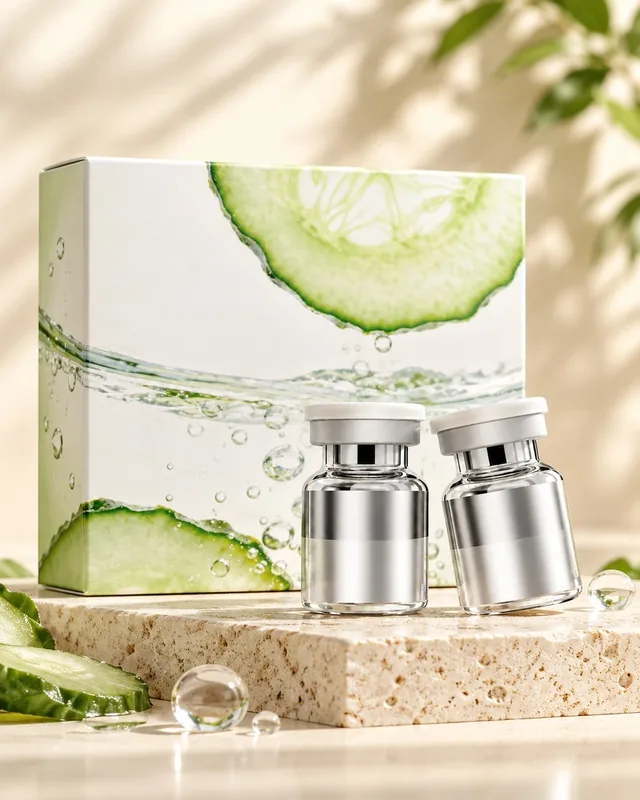
- Single-use ampoules and vials: concentrated serums for one treatment, such as the Milk Exosome Ampoule — Post-Procedure Comfort; 30 ml ampoule serums from the serums and ampoules range suit retail home care.
- Lyophilized powder kits: freeze-dried actives mixed with a solvent just before use, for example the Mars Repair Lyophilized Powder.
- Sheet and hydrogel masks: the Centella Barrier Hydrogel Face Mask and the Collagen Peptide Hydrating Sheet Mask finish a facial with a calming, hydrating step.
- Clay and wash-off masks: the Aloe Vera & Kaolin Face and Body Mask suits purifying facials and body treatments.
- Massage oils: the Botanical Body Massage Oil and Ginger & Grapefruit Massage Oil support spa skin care and body rituals.
- Cleansing oils and cleansers: the first step of nearly every facial.
Our guide to lyophilized vs liquid serums explains the trade-offs between powder kits and ready-to-use ampoules.
What are professional skin care collections?
Professional collections are curated kits designed around a treatment concept, combining several actives for use in clinic or as premium home care. They save the esthetician from building a protocol from scratch.
Mars lists a range of professional collections, including the Clinic-at-Home Recovery Collection and the Redness, Sensitive Skin & Wellbeing Collection. Products used after professional skin treatments such as microneedling should follow the treating professional’s protocol, and all wording should stay cosmetic: soothing, hydrating, supports the skin barrier. Our aftercare protocol article covers how clinics structure this step, and a med-spa aftercare project shows a real launch.
Private label for spas and estheticians
Private label lets a spa or esthetician sell skin care products under its own name, using established, stability-checked formulas from a supplier. It turns every treatment into a recommendation for the clinic’s own brand rather than someone else’s.
- Map your treatments: list the facials and body rituals you offer and the home care each needs.
- Choose a core range: typically a cleanser, a serum or ampoule, a moisturizer and one mask.
- Sample and test: try formulas in the treatment room and with trusted clients.
- Design the brand: logo, label languages and packaging that match your clinic.
- Register and launch: complete market registration with the supplier’s documents, train staff and introduce the line during treatments.
For background, see what private label skincare is and how it differs from OEM and ODM.
What makes a good professional skin care line?
A good professional skin care line is consistent, well documented and easy to build treatments around. Estheticians need products that behave the same way in every session and every batch.
- Reliable textures: serums that spread evenly under massage, masks that sit well and cleansers that rinse cleanly.
- Clear protocols: a logical order of use, from cleanse and prepare to ampoule, mask and finish.
- Matching home care: retail products that continue the treatment story between visits.
- Sensitive-skin options: calming formats for reactive clients and for comfort after professional skin treatments.
- Complete documents: full INCI lists for client consultations, plus batch documents for the clinic’s records.
- Honest claims: cosmetic wording that protects both the client relationship and the business.
Spa skin care also depends on sensory details: scent, temperature and the feel of each product in the hands. Testing samples in real treatments is the only reliable way to judge them. Ask therapists to note slip and working time during massage, how each product layers with the next step and how clients describe their skin afterward. Those notes become the basis of your treatment protocols, staff training and retail recommendations.
Distributor and dropshipping considerations
Distributors and beauty product suppliers who serve estheticians need consistent batches, complete documents and a clear range structure. Spa buyers expect professional and retail formats to match.
When evaluating a beauty product supplier, check that products are made to cosmetic GMP, that batch documents are available and that formulas have known stability and shelf life. Dropshipping beauty products and private label dropshipping are different models from wholesale private label: with private label, the brand owns its range, its stock and its compliance. If you plan to sell online with a fulfillment partner, confirm labeling and registration for each market before launch.
Launching a professional line with Mars
Mars supplies private-label professional skin care to estheticians, spas, clinics and distributors, from treatment-room ampoules and collections to retail cleansers, serums and creams. Start by shortlisting formats for your treatments and requesting samples.
Mars adapts the artwork with your logo and label languages and shares a digital proof before printing. Products are made to cosmetic GMP (ISO 22716 / GMPC) with batch records and stability checks; MSDS, COA per batch on request and the full INCI list support your local registration. Custom protocols and formulas can be developed through OEM and ODM, and the quality page explains how batches are documented. Request professional samples to begin.
Mars product team
Product specialists at Shanghai Mars Cosmetics Co., Ltd., Shanghai. Questions about this article? Contact us.