Ingredients
Vitamin C serum: benefits for your face, the different forms and how to keep it stable
What a vitamin C serum does for your face, how L-ascorbic acid compares with stable derivatives, and how brands choose packs and formulas that stay fresh.

A vitamin C serum is a concentrated, usually water-based serum containing vitamin C (ascorbic acid or one of its derivatives), an antioxidant used to help skin look brighter, more radiant and more even. It is typically applied in the morning before moisturizer and sunscreen. For brands, vitamin C is one of the most searched skincare ingredients, but it is also one of the hardest to keep stable — so the choice of form and pack decides whether a product succeeds.
What does a vitamin C serum do for your face?
A vitamin C serum helps the face look brighter and more even and supports skin against the look of environmental stress. Its benefits are cosmetic and build up gradually with regular use.
- Brightening: helps dull skin look more radiant and luminous.
- More even look: helps reduce the look of dark spots and uneven tone over time.
- Antioxidant support: helps defend skin against the visible effects of pollution and daily exposure, alongside sunscreen.
- Smoother look: as part of a routine, skin appears fresher and more refined.
It is not a sunscreen and it does not erase pigmentation. Honest copy talks about a “brighter, more even-looking complexion”, which is also what customers actually notice.
Which forms of vitamin C are used in skincare?
Skincare uses either pure L-ascorbic acid or a more stable derivative, and the choice affects texture, tolerance and shelf life. Each has a place in a range.
| Form | Strengths | Watch-outs | Typical format |
|---|---|---|---|
| L-ascorbic acid | The most studied form; a well-known brightening serum benchmark | Needs low pH; oxidizes quickly; can sting sensitive skin | Water or anhydrous serum in amber dropper |
| Sodium ascorbyl phosphate | Water-soluble, gentle, more stable | Works at a near-neutral pH, so feels mild | Serums, toners, lotions |
| Ascorbyl glucoside | Stable, gentle, easy to formulate | Slower, softer brightening story | Serums, creams |
| 3-O-ethyl ascorbic acid | Stable and well suited to brightening claims | Needs careful formulation | Serums, ampoules |
| Tetrahexyldecyl ascorbate | Oil-soluble, very stable | Oily texture; best in creams or oils | Creams, vitamin C oil for skin |
Serums with L-ascorbic acid appeal to experienced users who want the classic form. Stable derivatives suit sensitive skin, first-time users and products that must survive long shipping routes and warm shelves.
Why stability is the real challenge
Vitamin C breaks down when exposed to air, light, heat and water, and a degraded serum turns yellow, then orange or brown. Keeping it stable is a formulation and packaging job together.
- pH control: L-ascorbic acid needs a low pH to stay active; derivatives are more forgiving.
- Partner antioxidants: vitamin E and ferulic acid are a widely used combination that helps protect vitamin C in the formula.
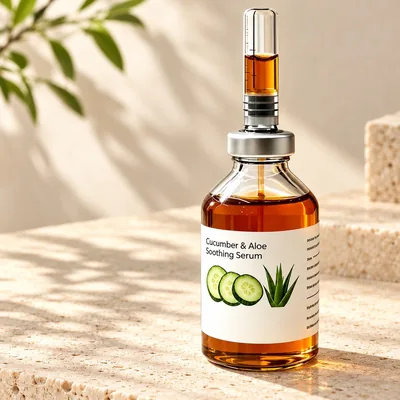
- Packaging: amber or opaque glass, airless pumps and smaller sizes reduce exposure to light and air.
- Two-part formats: powder-plus-liquid kits keep vitamin C dry until the customer mixes it.
- Storage advice: tell customers to close the cap tightly and keep the bottle out of sunlight.
Stability checks at different temperatures, before launch, are how a supplier confirms a vitamin C serum keeps its color and performance through its shelf life.
Does a higher percentage mean a better vitamin C serum?
No. A higher percentage is not automatically better; the form, pH, pack and skin tolerance matter more than the headline number. A “20 vitamin C serum” sounds strong, but at that level L-ascorbic acid can sting, and much of it can oxidize before the bottle is finished.
Derivatives are also not directly comparable to L-ascorbic acid percent for percent, because each converts or behaves differently in skin. A 10% stable derivative and a 15% L-ascorbic acid serum are simply different products for different customers. For a brand, the more useful questions are:
- Who is the customer — an experienced user or someone new to actives?
- Will the product sit in a warm bathroom or ship through hot climates?
- Does the texture work under makeup and sunscreen?
- Can the claim be described honestly in cosmetic terms?
Answering these first leads to a vitamin C serum that customers finish and reorder, rather than one that turns brown halfway through.
Vitamin C serum, cream or oil?
A serum delivers the most concentrated dose in a light texture. A vitamin C cream combines brightening with moisturizing, which suits dry or mature skin and simpler routines. An oil-soluble vitamin C in a facial oil suits dry skin and evening use. Many ranges offer a serum and a cream so customers can choose.
Which vitamin C serum suits which skin type?
Match the form and texture to the skin type: gentler derivatives for sensitive skin, light gels for oily skin, and richer textures for dry or mature skin.
- Vitamin C serum for sensitive skin: a stable derivative, fragrance-free, with soothing extracts such as licorice or centella.
- Vitamin C serum for oily skin and acne-prone skin: a light, non-greasy gel, often combined with niacinamide.
- Vitamin C serum for dry skin: a formula with hyaluronic acid or glycerin, followed by a vitamin C cream.
- Mature skin: a vitamin C serum layered with peptides or a nourishing cream; see our anti aging cream guide for pairings.
How to use a vitamin C serum
Apply a vitamin C serum in the morning to clean, dry skin, before moisturizer and sunscreen. That order puts the antioxidant on skin when daytime exposure is highest.
- Cleanse and pat skin dry.
- Apply three or four drops of vitamin C serum to the face and neck.
- Layer hydration: a hyaluronic acid serum or light lotion.
- Moisturize to seal the routine.
- Finish with sunscreen every morning.
New users can start every other day and build up. Strong exfoliating acids are usually better kept to the evening routine.
Building a vitamin C skincare range
A vitamin C range works because customers understand the brightening story instantly, and the same hero can run from cleanser to cream. Mars’s catalogue uses stable vitamin C derivatives across several formats.
- Serum: the Vitamin C Radiant Glow Ampoule Serum, built on a high-concentration vitamin C derivative.
- Cream: the Stable Vitamin C Brightening Cream for customers who want a vitamin C cream for the face.
- Toner and lotion: the Radiant Glow Elixir Toner and Vitamin C Bright Veil Lotion.
- Set: the Vitamin C & Niacinamide Brightening Set as a ready-made routine.
A pure L-ascorbic acid serum is not part of the current catalogue; it can be developed as an ODM project if your positioning calls for it. Browse all serums and ampoules to compare textures.
Launching your own vitamin C serum with Mars
Mars helps brands launch a vitamin C serum by combining a stable catalogue formula with packaging chosen to protect it.
- Pick the formula and form: a catalogue derivative serum, or an ODM brief for a different form or texture.
- Test samples before volume production, including color and scent after opening.
- Choose protective packaging: amber dropper, airless pump or ampoules, printed with your logo, artwork and label languages after you approve a digital proof.
- Get the documents: full INCI list, MSDS and a COA per batch on request, stability checks and batch records; standard formulas carry a 3-year shelf life.
Products are made to cosmetic GMP (ISO 22716 / GMPC). Market registration is the responsibility of the brand owner or importer, using the documents Mars supplies. Learn more about OEM and ODM development or request vitamin C samples.
Mars product team
Product specialists at Shanghai Mars Cosmetics Co., Ltd., Shanghai. Questions about this article? Contact us.